The Resistor
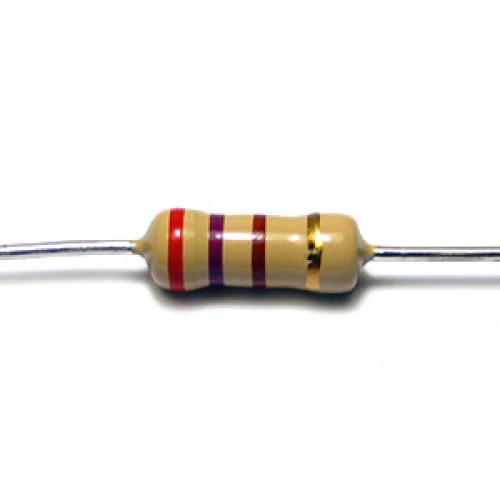

A resistor is just as the name implies. It reduces the current flowing in a circuit. The Downside is that because it resists the current, the electrons flowing through the resistor causes friction and will make the resistor heat up. (Heaters uses this principal)
Resistors can be classified into different types based on their physical construction, including carbon film resistors, metal film resistors, and wire wound resistors. They can also be classified based on their power rating, which indicates the maximum amount of power that the resistor can safely dissipate without overheating. Resistors is sold in different packages, where the most common for DIY Makers is, the 1/4-Watt Resistor.
Resistors are used in a variety of electronic circuits to limit the flow of current, adjust the voltage levels of signals, and divide voltages. They are also used to protect sensitive electronic components from damage due to high current levels. Resistor values are typically indicated by colored bands or by numeric codes printed on the resistor body. The resistance value can be calculated using the color code or the numeric code.
Resistors are measured in ohms and the higher the ohms, the more it resists electricity. The Symbol for Ohm is Ω
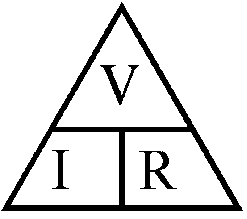
To calculate the current through a closed circuit, the following equation is used I = V/R
Where I = Current measured in amps; V = Voltage and R = Resistance.
The Formula above is also called Ohm's Law and to easy understand it, the triangle below shows the relation between Voltage Resistance and Current(I)